Telematics is no longer an experimental technology in car rental operations. As margins compress and fleets become more complex to manage, it is increasingly used as a control layer that helps operators reduce losses, limit downtime, and make better operational decisions in real time.
However, telematics is also one of the most misunderstood investments in the rental industry. Many operators associate it primarily with tracking vehicles or monitoring customers, which leads to poor implementations, customer resistance, and legal concerns. In reality, tracking is only a small part of the value equation.
The real purpose of telematics in car rentals is operational predictability. It allows operators to detect deviations early, respond faster to risk scenarios, and shift from reactive problem-solving to structured workflows. When implemented correctly, telematics reduces non-return losses, lowers accident and repair costs, improves maintenance planning, and increases effective fleet utilization — without turning the rental experience into intrusive surveillance.
This guide takes a practical, operator-focused view of telematics. It does not assume perfect data or unlimited budgets. Instead, it focuses on real-world use cases, measurable outcomes, and common failure points. You will learn which telematics capabilities actually matter for rental businesses, how to connect them to daily operations, how to justify the investment financially, and how to deploy telematics in a way that respects customer privacy and regulatory constraints.
The goal is simple: fewer losses, less downtime, and better decisions — not more dashboards.
What Telematics Means for Car Rental Operations
Telematics in a rental context is best understood not as a standalone technology, but as a data source that only becomes valuable when embedded into operational decision-making. Confusion often arises because telematics, GPS tracking, and rental management software are discussed interchangeably, even though they serve very different roles.
Telematics vs GPS Tracking vs Fleet Management Software
GPS tracking is the most visible component of telematics, but it is also the narrowest. It answers a basic question: where is the vehicle now, and where has it been. Telematics expands this view by adding behavioral and technical signals such as mileage, driving patterns, and vehicle health indicators.
Fleet or rental management software operates at a different level entirely. It does not generate data. It organizes vehicles, reservations, contracts, maintenance, incidents, and financial records. Its value lies in structure and workflow, not sensors.
Problems arise when telematics is deployed without a clear connection to rental operations. Location data, fault codes, or behavior events may be visible, but no one owns the decision of what happens next.
Where telematics ends and RMS begins
Telematics ends where interpretation begins. Devices can report that a vehicle crossed a border, exceeded a mileage threshold, or triggered an engine warning. They cannot decide whether the rental should be escalated, the vehicle blocked, or maintenance scheduled.
Those decisions belong inside the rental management system, where alerts can be translated into tasks, incidents, or maintenance actions. Without this handoff, telematics remains an isolated monitoring layer rather than an operational tool.
Why “having data” is useless without workflows and decisions
Data without ownership does not improve outcomes. Alerts that are not tied to clear responsibility and predefined actions quickly lose relevance. Staff stop responding, and critical events blend into background noise.
Effective telematics usage requires explicit answers to three questions: which signals matter, who responds to them, and what outcome is expected. Anything else is operational overhead.
The Telematics Value Chain
The economic value of telematics follows a simple progression that is often broken in practice.
Data → alerts → actions → outcomes
Raw vehicle data must be filtered into meaningful alerts. Alerts must trigger actions by specific roles. Actions must produce outcomes such as reduced downtime, avoided losses, or lower repair costs. If any link in this chain is missing, telematics becomes a cost center rather than a profit lever.
Why alert overload kills ROI
One of the most common failure points is alert design. Excessive alerts, poorly defined thresholds, or notifications without required follow-up create fatigue. Operators stop trusting the system, and genuinely critical events are missed.
High-performing rental operations deliberately limit alerts to those that require action. Fewer, higher-quality alerts generate better results than comprehensive monitoring with no prioritization.
Core Telematics Capabilities (What Matters Most)
Telematics platforms often advertise dozens of features, but in car rental operations, value does not come from feature breadth. It comes from a small number of capabilities that consistently influence losses, downtime, and operating cost control. Everything else tends to add complexity without improving outcomes.
For rental operators, the challenge is not collecting more data, but identifying which signals reliably support better decisions.
GPS Tracking and Vehicle Location Intelligence
GPS tracking is the most familiar telematics capability, yet its operational value is frequently overstated. Continuous real-time tracking rarely improves day-to-day rental decisions. Its real contribution emerges when a rental deviates from expectations.
Real-time location and last known location
In exception scenarios, such as delayed returns or loss of communication, knowing a vehicle’s current or last known location immediately reduces uncertainty. This context allows operators to differentiate between benign delays and emerging risk. In these moments, GPS acts as a verification tool rather than a monitoring mechanism, enabling faster and more confident escalation.
Theft recovery and non-returned vehicle scenarios
For theft and non-return cases, historical movement data often matters more than live position. Understanding where a vehicle has traveled, how long it remained stationary, and whether it moved toward higher-risk areas improves recovery coordination and strengthens documentation for insurers and authorities.
Geofencing and Route Controls
Geofencing adds contractual meaning to location data by defining where a vehicle is expected to operate. In rental businesses, this expectation is closely tied to insurance validity and recovery feasibility.
Unauthorized area alerts (state and country boundaries, restricted zones)
Cross-border movement is one of the most critical risk indicators. Once a vehicle leaves an approved jurisdiction, recovery costs and complexity increase sharply. Early detection allows operators to intervene while options remain available, often preventing losses rather than reacting to them.
Airport zone logic, depot-only logic, off-limits zones
More advanced use cases involve internal controls. Vehicles awaiting service may be restricted to depot movement. Short-term rentals may be limited to airport zones. Certain off-road or high-risk areas may be excluded entirely. When geofencing rules reflect rental terms, enforcement becomes systematic rather than discretionary.
Driver Behavior Monitoring
Driver behavior data is valuable only when interpreted carefully. Rental driving environments are unpredictable, and isolated events rarely indicate misuse.
Harsh braking, rapid acceleration, and speeding
Repeated aggressive driving patterns correlate strongly with accident risk and accelerated wear. Over time, these patterns provide reliable signals for internal risk assessment, vehicle inspection prioritization, and policy refinement.
When behavior scoring helps — and when it creates disputes
Behavior scoring is most effective as an internal indicator rather than a direct billing tool. Using opaque scores to penalize customers retroactively almost always leads to disputes. Successful operators use behavior data to inform decisions, not to automate punishment.
Vehicle Health and OBD Diagnostics
Vehicle health signals connect telematics to maintenance and uptime optimization.
Engine fault codes and warning light triggers
Early detection of engine or system faults allows operators to remove vehicles from circulation before minor issues escalate into breakdowns or secondary damage, reducing downtime and repair costs.
Battery health signals (where applicable)
For hybrid and electric vehicles, basic battery and charging data improves planning and reduces unexpected downtime, even without deep diagnostic detail.
GPS Use Cases That Directly Reduce Losses
In car rental operations, GPS delivers its highest value not during normal rentals, but at the point where uncertainty begins to translate into financial risk. Losses almost never happen instantly. They develop gradually, through missed return times, reduced customer responsiveness, or early policy violations. GPS shortens the time between the first warning sign and a controlled response.
The most effective operators use GPS as an early-intervention tool, not as a constant monitoring layer. Its purpose is to provide context quickly enough to prevent escalation.
Preventing and Handling Non-Returns
Non-returned vehicles are among the most costly incidents a rental business can face. Deposits and contractual penalties protect revenue only after the fact; they do little to improve recovery probability. GPS improves outcomes by enabling earlier, evidence-based decisions.
Escalation workflow (customer contact → deposit actions → recovery)
When a vehicle exceeds its agreed return time, GPS data helps determine whether the situation is likely benign or high-risk. A stationary vehicle near the original location suggests a solvable delay. Ongoing movement toward unfamiliar or high-risk areas suggests the need for escalation. Effective operators formalize this process so that each stage — customer contact, internal incident creation, deposit action, and recovery coordination — is triggered by predefined conditions rather than individual judgment.
Time-based triggers and thresholds
Time is a more reliable signal than distance. Short delays rarely justify intervention. Extended delays do. By defining internal time-based thresholds, operators ensure that GPS data is used consistently, reducing both overreaction and delayed response.
Theft Deterrence and Recovery
GPS does not eliminate theft, but it materially improves recovery outcomes. Vehicles known to be tracked are less attractive targets, and when theft does occur, accurate location history accelerates coordination with law enforcement and insurers.
Best practices for recovery coordination
Successful recovery depends on disciplined processes. GPS data must be accurate, accessible, and supported by internal documentation. When location data is integrated into incident records, it strengthens claims and reduces ambiguity during investigations.
Minimizing false alarms
False theft alerts are costly. Operators who achieve strong results distinguish clearly between overdue rentals and suspected criminal activity. GPS supports this distinction, but only when combined with clear escalation criteria.
Unauthorized Use and Policy Enforcement
Unauthorized use often creates losses indirectly, through insurance exclusions, accelerated wear, or recovery challenges.
Cross-border usage
Cross-border movement is particularly risky because recovery options narrow quickly. Early detection allows operators to contact customers while resolution is still simple, often avoiding escalation entirely.
Off-road and restricted area violations
Driving in prohibited areas increases damage risk and may void coverage. GPS-based detection allows operators to intervene early, reinforcing policy compliance without post-rental disputes.
Driver Behavior Use Cases (Risk and Profitability)
Driver behavior data is one of the most sensitive and easily misused elements of telematics in car rental operations. When handled correctly, it reduces accidents, lowers repair costs, and improves risk predictability. When handled poorly, it creates disputes, customer dissatisfaction, and legal exposure. The difference lies not in what is measured, but in how the data is applied.
For rental operators, driver behavior should be treated as a risk management signal, not a direct monetization tool.
Reducing Accident Rates and Damage Frequency
Aggressive driving behaviors such as harsh braking, rapid acceleration, sharp cornering, and sustained speeding are strongly correlated with accident probability and vehicle wear. However, these signals are only meaningful when interpreted as patterns rather than isolated events.
Linking driving style to claims and repair costs
Over time, repeated high-risk driving during a rental period increases the likelihood of claims and post-rental repairs. Operators who analyze behavior trends consistently see clearer links between driving style and damage frequency. This insight allows them to prioritize inspections, identify vehicles exposed to higher stress, and improve loss forecasting without relying solely on incident reports.
How to use behavior alerts without harming customer experience
Behavior alerts should rarely be customer-facing in real time. Immediate confrontation or automated penalties based on single events often feel arbitrary to renters. Instead, the most effective operators use alerts internally to guide follow-up actions, inspections, or post-rental reviews. This approach reduces friction while preserving the preventive value of the data.
Risk-Adjusted Deposits and Policies (Optional, If Legal)
In some markets, historical driving behavior can support differentiated rental policies, provided legal and regulatory requirements are respected.
When to use higher deposits vs stricter terms
Rather than penalizing behavior retroactively, operators may adjust future rental conditions for repeat customers with consistent high-risk patterns. Higher deposits, stricter mileage limits, or mandatory coverage options can be applied transparently, based on documented history rather than subjective judgment.
Avoiding discrimination and legal pitfalls
Any use of behavior data must be objective, explainable, and consistently applied. Opaque scoring models or selective enforcement create legal and reputational risks that quickly outweigh operational benefits.
Training and Education for Repeat Customers
Driver behavior data also supports proactive risk reduction through communication rather than enforcement.
Gentle nudges vs punitive enforcement
For repeat or long-term renters, aggregated feedback on driving patterns can be framed as a safety and vehicle-care reminder. When positioned correctly, this reduces risk without damaging trust or loyalty.
Loyalty programs tied to safe driving (if applicable)
In some business models, especially corporate or subscription rentals, behavior data can support incentive-based programs that reward consistent safe driving. While not universally applicable, this approach aligns customer behavior with fleet longevity and cost control.
Maintenance Triggers and Downtime Reduction
For many rental businesses, maintenance remains one of the least predictable cost centers. Vehicles are often serviced either too late, after a breakdown occurs, or too early, based on rigid calendar schedules that ignore actual usage. Telematics helps close this gap by aligning maintenance decisions with real vehicle condition and utilization patterns, directly reducing downtime and unnecessary repair costs.
The value of telematics in maintenance is not sophistication, but timing. The right intervention at the right moment prevents cascading failures and avoids pulling vehicles out of service during high-demand periods.
Preventive Maintenance Scheduling Using Telematics
Traditional maintenance schedules rely on calendar intervals or manual mileage tracking. While simple, these approaches create blind spots in rental environments where vehicle usage varies significantly.
Mileage-based intervals vs calendar-based intervals
Mileage-based triggers derived from telematics provide a more accurate signal of wear than calendar dates. Vehicles used intensively reach service thresholds faster, while lightly utilized vehicles can remain in service longer without increased risk. This alignment reduces both premature servicing and unexpected failures.
In practice, the most effective setups combine mileage-based triggers with calendar limits, ensuring that vehicles are serviced neither too early nor too late.
Aligning service windows with demand lows
Telematics enables operators to anticipate when a vehicle will reach its next service threshold. This foresight allows maintenance to be scheduled during predictable demand lulls rather than reacting after a warning light appears mid-rental. Even small improvements in timing reduce lost rental days across the fleet.
Predictive Maintenance Signals (Practical, Not Hype)
Predictive maintenance is often presented as advanced analytics, but in rental operations, practical signals deliver most of the value.
Fault-code trends and recurring issues
Repeated fault codes across similar vehicles or engine types often reveal underlying issues before failures occur. Telematics allows operators to identify these patterns early, enabling targeted inspections or supplier interventions rather than waiting for breakdowns to surface individually.
Early detection of high-cost failures
Some failures, such as cooling system issues or drivetrain problems, escalate rapidly once symptoms appear. Early alerts give operators the opportunity to remove vehicles from circulation before secondary damage multiplies repair costs and extends downtime.
Service Workflow Automation
Telematics only reduces downtime when maintenance signals are translated into action.
Ticket creation and routing to maintenance teams
When fault codes or service thresholds are reached, automatic task creation ensures that issues are not lost in dashboards. Assigning ownership and deadlines transforms signals into predictable workflows rather than ad hoc reactions.
Spare parts planning and vendor coordination
Over time, maintenance data improves forecasting. Operators can anticipate parts demand, coordinate with service partners, and reduce waiting time caused by unavailable components. This operational maturity compounds savings beyond individual repairs.
Alert Design: From Raw Signals to Actionable Workflows
Telematics only delivers value when signals lead to action. In many rental operations, this is where implementations fail. Raw data is abundant, but alerts are poorly designed, ownership is unclear, and responses are inconsistent. The result is alert fatigue, missed incidents, and eroded confidence in the system.
Effective alert design starts with a simple premise: not every signal deserves an alert, and not every alert deserves immediate action.
Building an Alert Taxonomy
Rental operations benefit from categorizing alerts by operational impact rather than technical origin.
Critical vs warning vs informational
Critical alerts require immediate action because they expose the business to direct loss or safety risk. Warnings indicate elevated risk that should be reviewed within a defined timeframe. Informational alerts provide context but do not require response. Separating these categories prevents staff from treating all alerts as equally urgent, which is one of the fastest paths to alert fatigue.
Reducing alert fatigue
Alert fatigue is not caused by too much data, but by too many expectations. When every alert implies urgency, none of them do. High-performing operators deliberately limit critical alerts to a small, stable set and review warning-level alerts in batches rather than in real time.
Recommended Triggers and Thresholds
Alert thresholds should reflect rental realities rather than technical capabilities.
Non-return risk triggers
Non-return alerts work best when based on time rather than distance. A missed return window combined with reduced customer communication is a stronger signal than mileage anomalies alone. GPS data then provides confirmation, not speculation.
Out-of-zone triggers
Geofencing alerts should prioritize high-impact boundary breaches, such as cross-border movement or entry into uninsured zones. Overly granular zones increase noise without improving outcomes.
Maintenance triggers
Maintenance alerts should focus on service thresholds and fault codes that require action before failure occurs. Cosmetic or low-impact warnings rarely justify interrupting rental availability.
What to Do After an Alert Fires
An alert without a response plan is operational clutter.
SOP templates for operations teams
Each alert category should map to a documented response path: who reviews it, how quickly, and what actions are permitted. This consistency reduces reliance on individual judgment and improves auditability.
Audit log and documentation for disputes
Alerts tied to incidents, claims, or disputes should automatically generate records. Time-stamped logs, GPS snapshots, and maintenance signals provide objective evidence that protects both the operator and the customer.
Telematics ROI and Cost Justification
Telematics is often evaluated emotionally rather than financially. Operators either view it as an insurance policy against extreme losses or dismiss it as an unnecessary expense. In reality, telematics is best understood as an operational efficiency investment with multiple, compounding return drivers.
The key to a realistic ROI assessment is separating direct, measurable impacts from secondary benefits and modeling conservative assumptions.
What Telematics Costs in Real Life
Telematics costs are usually predictable and stable, which makes ROI modeling easier than many other technology investments.
Hardware cost vs subscription cost
Most implementations involve an upfront hardware cost per vehicle and a recurring monthly subscription for data connectivity and platform access. Hardware costs are incurred once and depreciated over the life of the vehicle, while subscription fees scale linearly with fleet size.
From an ROI perspective, subscription cost matters more than hardware, because it defines the ongoing break-even threshold that telematics must justify every month.
Installation and maintenance overhead
Installation requires initial labor and occasional device replacement, but these costs are typically marginal compared to downtime or repair expenses. Operators who plan installation during vehicle intake or scheduled service minimize disruption and avoid hidden overhead.
ROI Drivers
Telematics generates return through several independent channels. The strongest implementations do not rely on a single benefit, but on cumulative effects.
Downtime reduction
Even small reductions in unplanned downtime produce outsized financial impact. Every avoided off-road day preserves potential rental revenue while fixed costs continue to accrue regardless of vehicle availability.
Lower repair costs
Earlier fault detection reduces secondary damage. Addressing issues before failure prevents cascading repairs that extend downtime and inflate invoices.
Claims and chargeback reduction
Better documentation of vehicle condition, usage, and incidents strengthens claims handling and reduces chargeback exposure. This benefit is often underestimated because it appears indirectly in financial reports.
Theft and non-return loss reduction
Prevented losses are infrequent but high impact. Even a single avoided non-return can justify telematics costs across dozens of vehicles.
Mini-Calculations
Example: downtime avoided value
Assume a vehicle generates $60 per day in net contribution margin. Avoiding just three unplanned downtime days per year preserves $180 per vehicle. Across a fleet of 100 vehicles, that represents $18,000 annually — often exceeding total subscription costs.
Example: claims reduction value
If telematics-supported interventions reduce claim frequency by a modest percentage, the savings compound quickly. Fewer claims also reduce administrative time and insurance friction, which are rarely captured in simple ROI models.
Payback period logic
When downtime reduction, repair cost savings, and loss prevention are modeled conservatively, many operators reach payback within the first year. The exact timeline varies, but implementations that fail to show progress within 12–18 months usually suffer from workflow issues rather than insufficient data.
Implementation Roadmap (Step-by-Step)
Successful telematics implementations rarely fail because of technology. They fail because goals are unclear, ownership is missing, or rollout is too broad too early. A phased approach reduces risk, shortens time to value, and makes ROI visible before full-scale deployment.
Phase 1 — Define Use Cases and KPIs
Before installing a single device, operators must decide what success looks like. Telematics should be tied to a small number of operational outcomes rather than abstract visibility.
Choose 3–5 outcomes (loss reduction, downtime, claims)
The most effective programs focus on a limited set of objectives, such as reducing non-returns, lowering unplanned downtime, or improving claim documentation. These outcomes provide a clear filter for which signals matter and which can be ignored.
Set baseline metrics
Without a baseline, improvement cannot be measured. Operators should document current downtime, average repair cost, incident frequency, and loss history. These figures anchor ROI analysis and prevent subjective assessments later.
Phase 2 — Pilot on a Subset of Fleet
Pilots allow teams to test assumptions and workflows without exposing the entire fleet to disruption.
Which vehicles to pilot first (high-risk or high-value)
High-value vehicles, frequently damaged units, or those operating in high-risk locations are ideal pilot candidates. Improvements are easier to observe where risk and cost concentration is highest.
How long to run the pilot
A pilot should run long enough to capture multiple rental cycles and at least one maintenance event. Too short, and results are anecdotal. Too long, and momentum is lost. The goal is to validate workflows, not to perfect them.
Phase 3 — Integrate Telematics Into Operations
Data alone does not change outcomes. Integration into daily operations does.
Who responds to alerts
Every alert category must have a clear owner. Ambiguity leads to inaction. Defining responsibility ensures that signals translate into timely decisions.
How alerts become tasks
Alerts should automatically generate tasks, incidents, or maintenance tickets within operational systems. Manual copying between platforms introduces delay and error, undermining the value of real-time data.
Phase 4 — Scale and Optimize Rules
Once workflows are proven, scaling should be deliberate rather than aggressive.
Adjust triggers
Initial thresholds are rarely optimal. Operators should review false positives, missed incidents, and response times, then refine triggers based on real experience.
Reduce false positives
As rules mature, unnecessary alerts can be eliminated. This refinement preserves staff attention and ensures that critical alerts remain credible.
Privacy, Consent, and Customer Communication
Telematics introduces legal and reputational considerations that are often underestimated during implementation. Most failures in this area are not caused by the technology itself, but by poor disclosure, unclear communication, or inconsistent enforcement. When handled correctly, privacy and consent do not limit telematics value — they protect it.
What You Must Disclose to Customers
Transparency is not optional. Customers do not object to telematics because data is collected; they object when collection feels hidden or arbitrary.
Clear language for rental agreement disclosures
Rental agreements should clearly state what data is collected, for what purpose, and under what conditions it may be reviewed. Vague references to “vehicle monitoring” invite disputes. Clear language that ties data usage to safety, loss prevention, and vehicle protection establishes legitimacy and reduces friction.
Importantly, disclosures should focus on use cases, not technical detail. Customers need to understand why data is collected, not how devices work.
Consent capture and record keeping
Consent must be explicit, documented, and retrievable. Whether captured digitally or on paper, it should be linked to the rental record. This documentation becomes critical when disputes arise or when data is used to support claims or enforcement actions.
How to Avoid Customer Backlash
Customer resistance to telematics is rarely about privacy alone. It is usually triggered by surprise penalties, unclear policies, or inconsistent application.
Messaging: safety and service benefits
Telematics should be framed as a safety and service enhancement rather than a control mechanism. Positioning it as a way to reduce breakdowns, speed up assistance, and protect both the customer and the operator builds trust. When customers understand the benefit, acceptance increases significantly.
Avoiding “surprise fees” and unclear penalties
Nothing undermines trust faster than unexpected charges justified by opaque data. If telematics data may influence deposits, claims, or future rental terms, this must be communicated upfront. Enforcement should be predictable and consistent, not improvised after the fact.
Data Security and Access Control
While a full cybersecurity discussion is outside the scope of this guide, basic data governance is essential.
Least privilege access
Only staff who need telematics data to perform their role should have access. Limiting access reduces internal misuse risk and strengthens compliance posture.
Retention policies
Data should not be stored indefinitely. Retention periods should reflect legal requirements and operational necessity, with older data archived or deleted according to policy. Clear retention rules reduce liability without sacrificing operational value.
Common Mistakes That Kill Telematics ROI
Most telematics failures in car rental operations are not technical. They are managerial. The same patterns repeat across markets and fleet sizes, often leading operators to conclude that telematics “doesn’t work,” when in reality it was never set up to succeed.
Installing Devices Without Clear Goals
The most common mistake is deploying telematics hardware before defining what problems it is meant to solve. Without explicit objectives, teams default to passive monitoring. Data accumulates, dashboards fill up, and nothing changes operationally. ROI cannot emerge without a clear link between signals and outcomes.
Too Many Alerts and No Ownership
Alert overload is a fast way to neutralize telematics. When dozens of alerts fire daily and no one is clearly responsible for responding, staff stop paying attention. Critical events blend into background noise. Effective implementations deliberately limit alerts and assign ownership, ensuring that every alert implies a specific action.
No Integration With Maintenance and Operations Workflows
Telematics platforms are often run in isolation, separate from rental management and maintenance systems. This disconnect forces manual follow-up and delays action. When alerts do not automatically translate into tasks, tickets, or incidents, real-time data loses its advantage and becomes retrospective reporting.
Using Telematics as “Punishment” Instead of Prevention
Operators who use telematics primarily to justify penalties or retroactive charges quickly face disputes and reputational damage. Customers perceive the system as surveillance rather than protection. Preventive use — early intervention, inspections, and education — consistently delivers better financial and customer outcomes.
Poor Customer Disclosure Leading to Disputes
Even well-designed telematics programs fail when disclosure is weak. Ambiguous contract language, inconsistent explanations at pickup, or surprise enforcement erode trust. Disputes consume time, weaken claims, and negate savings achieved elsewhere in the operation.
How TopRentApp Helps You Use Telematics Effectively
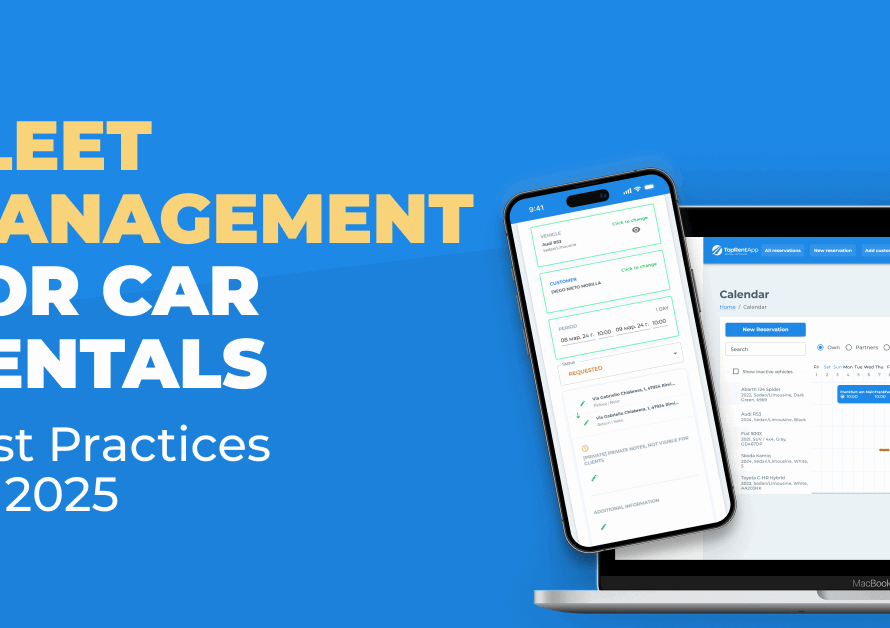
Telematics creates operational value only when it is connected to the systems that actually run a rental business. GPS data, location history, and vehicle status signals are useful, but on their own they remain fragmented inputs. The role of a rental management platform is to contextualize these inputs and embed them into daily operations. This is where TopRentApp plays a practical role.
TopRentApp does not position itself as a telematics provider. Instead, it acts as the operational backbone that allows rental operators to use telematics data — primarily GPS and status information — within structured rental, maintenance, and reporting workflows.
Centralized Fleet Visibility With GPS Context
TopRentApp provides a centralized view of vehicles, availability, and rental status. When GPS tracking is used through integrated providers, location information can be reviewed in context rather than in isolation. Operators see vehicles not just as dots on a map, but as assets tied to active contracts, overdue rentals, upcoming reservations, or blocked periods.
This contextual visibility is critical. A location signal has very different implications depending on whether a vehicle is currently rented, idle, overdue, or scheduled for maintenance. TopRentApp helps operators interpret telematics data through the lens of real operational state.
Operational Follow-Up on GPS-Related Events
While TopRentApp does not generate telematics alerts itself, it supports structured operational follow-up once an issue is identified through GPS data. Overdue rentals, suspected non-returns, or unauthorized movement detected via external tracking can be documented as incidents, linked to contracts, and followed through consistently.
This ensures that GPS-based situations are handled procedurally rather than informally, reducing reliance on memory, messaging apps, or ad hoc notes.
Maintenance Planning Informed by Usage Data
TopRentApp includes maintenance scheduling, service reminders, and vehicle blocking for technical reasons. When mileage or usage information is available from telematics or entered into the system, it can be used to support more accurate service planning.
Instead of relying purely on calendar intervals, operators can align maintenance decisions with actual vehicle usage, reducing the risk of overdue service or premature downtime.
Utilization and Downtime Reporting
One of the most important contributions of TopRentApp is accurate utilization tracking. By recording when vehicles are rented, blocked, or under maintenance, the platform provides a reliable view of downtime and availability.
This allows operators to evaluate the real impact of telematics-driven decisions — such as earlier maintenance or faster recovery from non-return situations — on fleet utilization and revenue performance, rather than relying on assumptions.
Incident Records and Audit Trails
TopRentApp maintains structured records for contracts, damages, incidents, and actions taken by staff. When GPS data or telematics context is relevant to a case, it can be referenced alongside these records.
This creates an audit trail that supports internal review, dispute resolution, and claims handling without positioning telematics data as a standalone or opaque source of truth.
Multi-Location and Scalable Operations
For operators managing multiple locations or fleets, TopRentApp provides consolidated reporting and standardized workflows. While telematics data may originate from different providers, operational handling remains consistent across locations, reducing variability and improving control as the business scales.
Practical Templates and Checklists
Telematics initiatives often fail not because of technology choices, but because execution lacks consistency. Operators may understand what they want to achieve, but without repeatable templates and shared standards, outcomes vary from case to case. The purpose of the following templates is to turn telematics from an abstract capability into a predictable operational discipline.
Telematics Vendor Evaluation Checklist
Selecting a telematics vendor is a long-term operational decision rather than a procurement exercise. Feature lists are less important than reliability, support quality, and integration readiness.
Data accuracy, coverage, support, integrations
From an operational perspective, data accuracy and geographic coverage determine whether telematics can be trusted in loss or dispute scenarios. Inconsistent GPS signals, delayed updates, or frequent data gaps undermine confidence and reduce willingness to act on alerts. Equally important is vendor support. When issues arise, response time and clarity matter more than advanced functionality.
Integration capability is another decisive factor. Even high-quality telematics data loses value if it cannot be connected to rental operations, maintenance workflows, or reporting tools. Operators should evaluate how easily data can be consumed by their existing systems and whether integrations are supported long term.
Reporting and exports
Telematics data must remain accessible beyond the vendor’s interface. Operators should be able to retrieve historical data, generate incident reports, and export records for insurers, auditors, or legal purposes. Limitations in reporting flexibility often surface only after deployment, when it is too late to change vendors easily.
Total cost transparency
A realistic cost assessment goes beyond device pricing. Subscription fees, replacement policies, data access charges, and integration costs all affect long-term ROI. Vendors that offer clear, predictable pricing tend to be easier partners over time than those with complex or opaque cost structures.
Operations SOP Checklist for Alerts
Alerts only create value when responses are consistent. Without defined procedures, identical alerts may trigger different actions depending on who is on duty, leading to uneven outcomes.
Who does what, when, and how
Each alert category should have a clearly defined owner and an expected response window. This removes ambiguity and prevents alerts from being ignored or endlessly forwarded. When escalation paths are predefined, responses become procedural rather than reactive.
Documentation standards
Every alert-related action should leave a trace. Time-stamped records linking the alert, the response, and the outcome protect the business during disputes and improve internal learning. Over time, this documentation reveals which alerts matter and which can be refined or removed.
Customer Disclosure Checklist
Customer acceptance of telematics depends far more on clarity than on technical detail. Most disputes arise not from data collection itself, but from misunderstanding how data is used.
What to include in terms
Rental terms should explain what categories of data are collected, why they are collected, and under which circumstances they may be reviewed. When this information is presented clearly, telematics feels like a standard operational safeguard rather than hidden monitoring.
How to present it during checkout or pickup
Disclosure must be consistent across channels. What is written in the contract should match what staff explain during checkout or pickup. When verbal explanations contradict written terms, trust erodes quickly. Consistency turns disclosure into reassurance rather than friction.
Conclusion — Turning Telematics Into Measurable Profit
Telematics in car rentals is often discussed in terms of technology, but its real value is operational. Devices, dashboards, and data streams do not reduce losses or increase utilization on their own. What makes telematics profitable is the discipline with which signals are interpreted, acted upon, and integrated into daily decision-making.
Across all use cases — GPS-based loss prevention, driver behavior analysis, and maintenance triggers — the same pattern emerges. Telematics works when it shortens reaction time, replaces assumptions with evidence, and embeds control into workflows rather than individual judgment. It fails when it is treated as passive monitoring, overloaded with alerts, or positioned as customer surveillance instead of operational protection.
The most successful rental operators do not try to measure everything. They focus on a limited set of outcomes: fewer non-returns, lower unplanned downtime, reduced repair costs, and more predictable utilization. They design alerts that demand action, assign ownership clearly, and continuously refine thresholds based on real results. Privacy and consent are handled transparently, not as legal afterthoughts, which preserves trust and avoids disputes that quietly erode ROI.
Telematics should ultimately disappear into operations. When implemented well, it stops being a “system” and becomes part of how the business runs — guiding maintenance timing, supporting claims, reinforcing rental policies, and improving fleet availability without constant manual oversight.
This is where rental management software becomes essential. Connecting telematics data to reservations, vehicles, maintenance, incidents, and analytics is what turns signals into outcomes. Platforms like TopRentApp provide this operational layer, allowing rental businesses to automate tasks and reminders, track downtime and utilization accurately, maintain structured records for incidents and disputes, and connect telematics context to reservations and maintenance planning, rather than treating data as an isolated stream.
Used this way, telematics is not an expense justified by fear of loss. It is a measurable profit lever — one that improves control, resilience, and decision quality across the entire rental operation.