
A car rental business plan needs to show who will rent your cars, how you will serve them and whether the cash lasts long enough to establish the business. A fleet purchase list is only one part of that answer. The plan must also connect rental days, prices, operating costs and the money tied up in vehicles.
Use the editable car rental business plan template and completed example to draft your own document. It includes writing prompts, an original five-car scenario and a transparent financial model you can recalculate with your own figures. The worked example is hypothetical, uses US dollars and represents an independent off-airport operation. Its prices and expenses are assumptions, not market benchmarks or financing offers.
What should a car rental business plan include?
A useful plan covers the customer, service area, fleet, daily operations, sales channels, team, funding and financial forecast. Put evidence beside the claims that matter: insurance quotations, vehicle offers, competitor observations, interviews and the terms of any proposed financing. The U.S. Small Business Administration’s planning guidance distinguishes concise lean plans from more detailed traditional plans and recommends matching the format to the reader’s needs.
For an owner making an initial decision, a short document with a sound model is useful. A lender may require additional statements, security details and forecasts in its own format. Ask for those requirements before polishing the document. This article focuses on preparing the plan; the broader guide to starting a car rental business covers the launch process.
Start with a specific customer and service area
Choose a first customer segment narrow enough to investigate. Local drivers waiting for repairs have different needs from airport visitors: expected rental duration, collection times, vehicle class and payment arrangements all change. A plan aimed at both should explain how the fleet and staffing support each group. Set the pickup location and service area at the same time. Delivery may require two employees to transport and recover a vehicle, or another paid transport arrangement; a charge that covers fuel alone can still lose money.
Record observations in a research log. Compare quotes for the same dates, vehicle category, mileage allowance and payment terms. Speak to potential customers and referral partners, noting the date, question and answer. A repair shop expressing interest is not a signed supply agreement. Keep that distinction visible in the sales forecast.
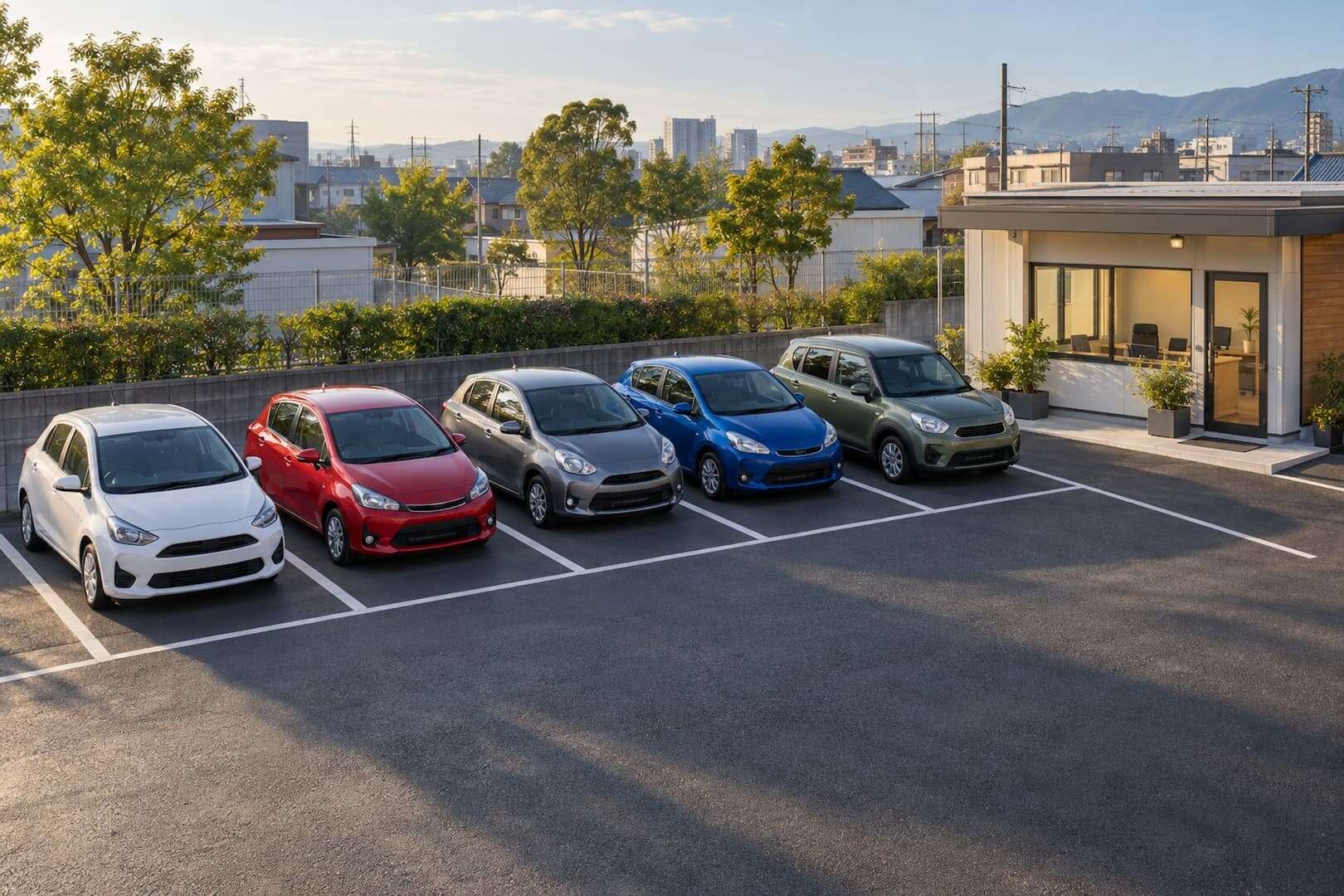
In the example, the proposed business has five compact cars, one neighborhood collection point and an owner who handles reservations and handovers. The first target is local replacement rentals, with weekend leisure bookings filling gaps. This is a proposed positioning to test, not a claim that a particular city has unmet demand.

Write the executive summary after the calculations
The opening page should let a reader understand the proposal without searching through the appendix. State the service, fleet size, location model, funding requirement and conditions for launch. Summarize the first-year forecast and the main uncertainty. Avoid describing the business as profitable before the model supports that conclusion.
For the five-car example, the summary could read: “The proposed company will offer compact-car rentals from one off-airport location. It requires $133,200 of owner funding, including fleet acquisition, setup and cash reserves. At the assumed first-year rental volume, it produces $12,000 of operating cash before tax and future capital spending, with approximately zero operating profit after the simplified vehicle depreciation charge. Launch depends on confirmed insurance, permitted vehicle use and evidence of local demand.”
The owner now has a decision to assess: does that first-year return justify $133,200 of capital and the work involved?
Explain the fleet and operating process
Fleet selection and vehicle availability
List each vehicle class, intended purchase price, preparation cost, expected holding period and resale assumption. Include inspection findings before purchase, the maintenance arrangement and how a damaged car leaves the booking calendar. If cars are financed, attach terms that expressly allow the intended rental activity.
Five cars provide 150 calendar car-days in a simplified 30-day month. They do not guarantee 150 saleable days. Servicing, repairs and turnaround reduce capacity. In this model, utilization means paid rental days divided by all calendar car-days, so downtime is already reflected in the utilization assumption. Do not remove downtime from capacity and then reduce utilization for the same lost days a second time.
For a fuller comparison of ownership structures, use the existing buy, lease and subscription guide. In the plan itself, document the selected approach and its cash consequences.
Reservations, handovers and returns
Describe what happens from the first enquiry to final settlement. Identify who checks availability, confirms the driver, takes payment, prepares the agreement, records vehicle condition and releases the vehicle. At return, cover fuel or charge level, mileage, damage review and deposit handling.
Include exceptions. Who responds when a car comes back late? What happens if a customer arrives outside opening hours or a vehicle fails an inspection? Name the responsible role and the replacement arrangement. A small fleet has little spare capacity, so these decisions belong in the plan before the first booking.
Turn marketing into a booking forecast
List the channels you will actually operate during the first three months. The example uses a direct booking website, local search visibility and conversations with repair businesses. Paid advertising has a fixed test budget. It does not assume that every enquiry becomes a rental or that a referral partner guarantees volume.
For each channel, estimate enquiries, the share that become completed rentals, average rental length and acquisition cost. The rental-length step matters: 20 completed bookings averaging three days produce 60 paid days, while the same booking count averaging six days produces 120. Check the resulting demand against the fleet calendar.
Assign one person to review cancelled bookings, unfulfilled requests and completed rentals each week. Use realized rental revenue after discounts for the average daily rate. Do not fill the model with the highest advertised weekend price if most customers receive weekly rates.
Build the financial model from rental days
The original example assumes five vehicles bought outright. Every month has 30 days for easier comparison; replace that convention with actual calendar days in a live forecast. Sales taxes collected for authorities, refundable customer deposits, financing, income tax and future vehicle purchases are excluded from the operating illustration. Owner compensation is included.
| Input | Hypothetical assumption |
|---|---|
| Vehicles | 5 |
| Purchase price per vehicle | $20,000 |
| Realized revenue per paid rental day | $70 |
| Variable cash cost per paid day | $10 |
| Fixed monthly operating cash costs | $4,400 |
| Residual value per vehicle after 60 months | $8,000 |
| Simplified monthly vehicle depreciation | $1,000 for the fleet |
The $10 daily variable allowance represents cleaning consumables, wear-related maintenance and transaction costs. Replace it with separate assumptions if costs follow bookings, miles or card transactions rather than rental days. The $4,400 monthly fixed allowance comprises insurance $1,250, premises $500, software $100, marketing $300, administration and utilities $250, and owner labor $2,000. These are planning inputs, not quotations.
Use the same calculation sequence for each month:
- Paid days = vehicles × calendar days × utilization.
- Revenue = paid days × realized daily rate.
- Contribution = revenue minus variable costs.
- Operating cash before tax and capital spending = contribution minus fixed operating cash costs.
- In this debt-free example, operating profit = operating cash minus depreciation.
At 70% utilization, paid days are 105. Revenue is $7,350, variable costs $1,050 and contribution $6,300. After $4,400 of fixed costs, operating cash is $1,900. Subtract the $1,000 depreciation assumption and operating profit is $900. Neither figure is the owner’s additional take-home pay: the model already includes $2,000 of owner compensation and still excludes income tax.
Show the first-year ramp
Use monthly demand assumptions rather than multiplying a busy month by twelve. The following ramp totals 1,080 paid days from 1,800 calendar car-days. Its 60% average utilization is an assumption to challenge with research.
| Month | Utilization | Revenue | Operating cash before tax and capital spending |
|---|---|---|---|
| 1 | 35% | $3,675 | −$1,250 |
| 2 | 45% | $4,725 | −$350 |
| 3 | 55% | $5,775 | $550 |
| 4 | 60% | $6,300 | $1,000 |
| 5 | 65% | $6,825 | $1,450 |
| 6 | 70% | $7,350 | $1,900 |
| 7 | 75% | $7,875 | $2,350 |
| 8 | 75% | $7,875 | $2,350 |
| 9 | 70% | $7,350 | $1,900 |
| 10 | 65% | $6,825 | $1,450 |
| 11 | 55% | $5,775 | $550 |
| 12 | 50% | $5,250 | $100 |
| Year | 60% | $75,600 | $12,000 |
Annual variable costs are $10,800 and fixed costs $52,800. After $12,000 of depreciation, operating profit is zero. The forecast needs stronger economics or an explicit reason to accept that first-year outcome.

Calculate the funding requirement and downside
The example’s opening funding is $100,000 for vehicles, $5,000 for acquisition taxes and registration allowances, $2,500 for preparation and $7,500 for other setup cash. The latter includes professional fees, equipment, website setup, a premises deposit, insurance setup fees and launch marketing. Add $13,200 for three months of fixed operating cash costs and a separate $5,000 incident reserve: total funding is $133,200.
Reserves remain cash until spent. Buying vehicles creates assets, while depreciation spreads their assumed consumption through the profit calculation. Refundable customer deposits are not funding available to cover payroll. Keep those categories separate when preparing the opening balance sheet with your accountant.
For cash operating break-even, divide $4,400 by the $60 contribution per paid day. The result is 73.3 paid days per month, or about 48.9% of calendar capacity. Including $1,000 depreciation increases the threshold to 90 days, or 60%. A financed fleet would need a separate debt schedule and cash repayment calculation.
At a constant 45% utilization, the example loses $350 of operating cash each month before tax and capital spending. Test a simultaneous rate reduction and repair interruption as well. Record the cash threshold at which you would postpone another vehicle purchase, cut discretionary spending or inject additional owner funds.
Finish with responsibilities, evidence and review dates
Assign an owner and deadline to each unresolved item: insurance, vehicle-use permission, local permits, premises, contracts, payments and the booking process. Attach the relevant documents instead of presenting them as completed tasks. The plan should make unresolved commitments visible.
Before sharing it, reconcile the funding request with the budget, verify that forecast bookings fit the available fleet and check that labor is realistic. Replace every example assumption with a quotation, measured result or clearly identified estimate. Then update the model monthly using actual paid days, realized rates, operating expenses and downtime. The fleet utilization guide can support that operating review.
Is this template suitable for a lender?
It is an editable starting document, with a worked example to show the calculations. A lender may also request financial statements, personal financial information, collateral details and a longer forecast. Confirm its checklist and adapt the document before submission.
Can I use the model for ten cars?
Yes, but review each expense as well as the vehicle count. A second employee, larger premises or another delivery vehicle can change costs in steps. Doubling revenue while leaving every cost unchanged would overstate the result.